Available · Founding engineer roles & AI consulting
Omkumar Solanki. AI agents, shipped to production.
Founding Engineer @ Resso.ai · Applied AI architect
I take a business problem, build the AI system that solves it, and hand it off running in production. Autonomous agent networks, multi-agent orchestration, on-premise RAG, real-time inference — end-to-end, every layer owned.
Why one LLM isn't enough. How I architect the alternative.
I build pipelines where specialised agents plan, remember, predict, and validate in concert. Reliable AI products, not fragile demos. Industry-standard architecture used at Deloitte, Accenture, and McKinsey.
Pipeline trace — task execution flow
User Task
"analyse this contract"
→
Orchestrator
plans · routes · retries
→
Memory Agent
reads session + vector store
ML Agent
risk scoring · classification
Tool Agent
fetches docs · calls APIs
→
Validator
checks coherence · confidence
→
Structured Output
JSON · report · action
Why multi-agent
Single LLM forgets
Memory Agent keeps session context short-term and retrieves long-term facts from a vector store. Agents never lose the thread.
One model can't specialise
Each agent is tuned for its job. An ML agent runs a fine-tuned risk model, a tool agent handles API calls. No jack-of-all-trades hallucinations.
Long tasks time out or drift
The orchestrator breaks work into atomic sub-tasks, runs them in parallel where possible, and retries failed nodes without re-running the whole chain.
No fault tolerance
A validator agent checks every agent's output before it passes downstream. Bad outputs are caught and rerouted, not silently swallowed.
How I build them
01
Define agent contracts
Each agent gets a strict input/output schema. The orchestrator enforces types so no agent can accept or emit arbitrary blobs.
02
Build the orchestrator
LangGraph or a custom state machine. It holds the DAG of agent dependencies, handles branching logic, and owns retry and fallback policy.
03
Wire the memory layer
Session memory lives in Redis (fast, ephemeral). Permanent memory indexes into pgvector or Pinecone. Agents query both on every turn.
04
Instrument every node
Each agent emits spans to an observability backend (Langfuse / OTLP). I can see exactly where latency or hallucinations enter the pipeline.
05
Harden with a validator
A lightweight LLM-as-judge agent scores coherence and confidence before results leave the pipeline. Below threshold, re-route or flag for human review.
Industry-standard patterns used at top-tier firms
Deloitte
Human-in-the-Loop (HITL)
Regulated industries require agents to pause and route high-risk decisions to human reviewers before action. Mandatory in Deloitte AI deployments for finance and healthcare.
Azure AI StudioSemantic KernelApproval Workflows
Accenture
Guardrails + PII Redaction
Constitutional AI filters, hallucination detection, and automatic PII scrubbing on every agent output. Accenture AI Hub mandates these before any client data touches an LLM.
NeMo GuardrailsPresidioAzure Content Safety
McKinsey / Big 4
Audit Trails + Compliance
Every agent action, tool call, and decision is logged with full trace context. SOC2, ISO 27001, and GDPR-ready architecture required across all enterprise AI platforms.
LangfuseOpenTelemetryImmutable Logs
IBM / SAP
Enterprise Orchestration Platforms
Large firms standardise on IBM Watson Orchestrate, AWS Bedrock Agents, or Google Vertex AI Agents for governance, cost control, and multi-model routing across business units.
Watson OrchestrateBedrock AgentsVertex AI
Full stackLangGraphAutoGenSemantic KernelCrewAIAzure AI StudioAWS BedrockVertex AIRedispgvectorPineconeLangfuseOpenTelemetryNeMo GuardrailsFastAPIDockerKubernetes
Experience & projects
Production AI systems. Real companies.
Every system here runs in the real world — with real users, real data, and real consequences when something breaks. Agentic systems lead; ML appears where a small, explainable model earned its place.
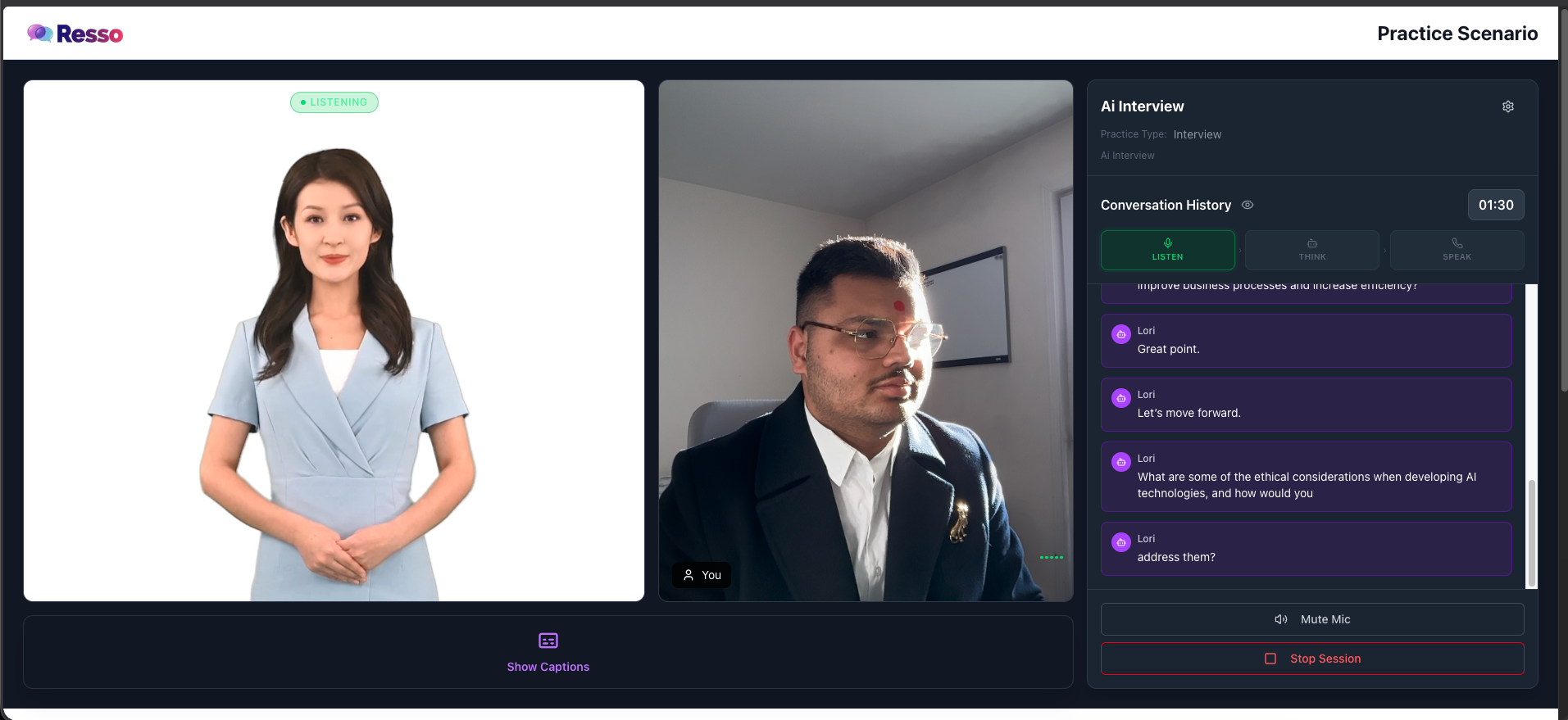
Built the entire production ML platform from scratch. WebRTC audio capture at 8 kHz, speaker diarization pipeline separating candidate and interviewer voices in real time, NLP feature extraction across prosody, semantics and pace, and live hire-probability scoring — all streaming inference at sub-2-second latency during a live interview. The AI rates conversations as they happen, not after.
Designed the talking AI avatar system: lip-sync audio-to-viseme mapping, WebSocket event bus, and on-device model quantisation for smooth real-time video rendering. The system processes every spoken word into actionable structured signals.
Inference latency: 8s → <2s · Job placement rate +45% · Live during interview
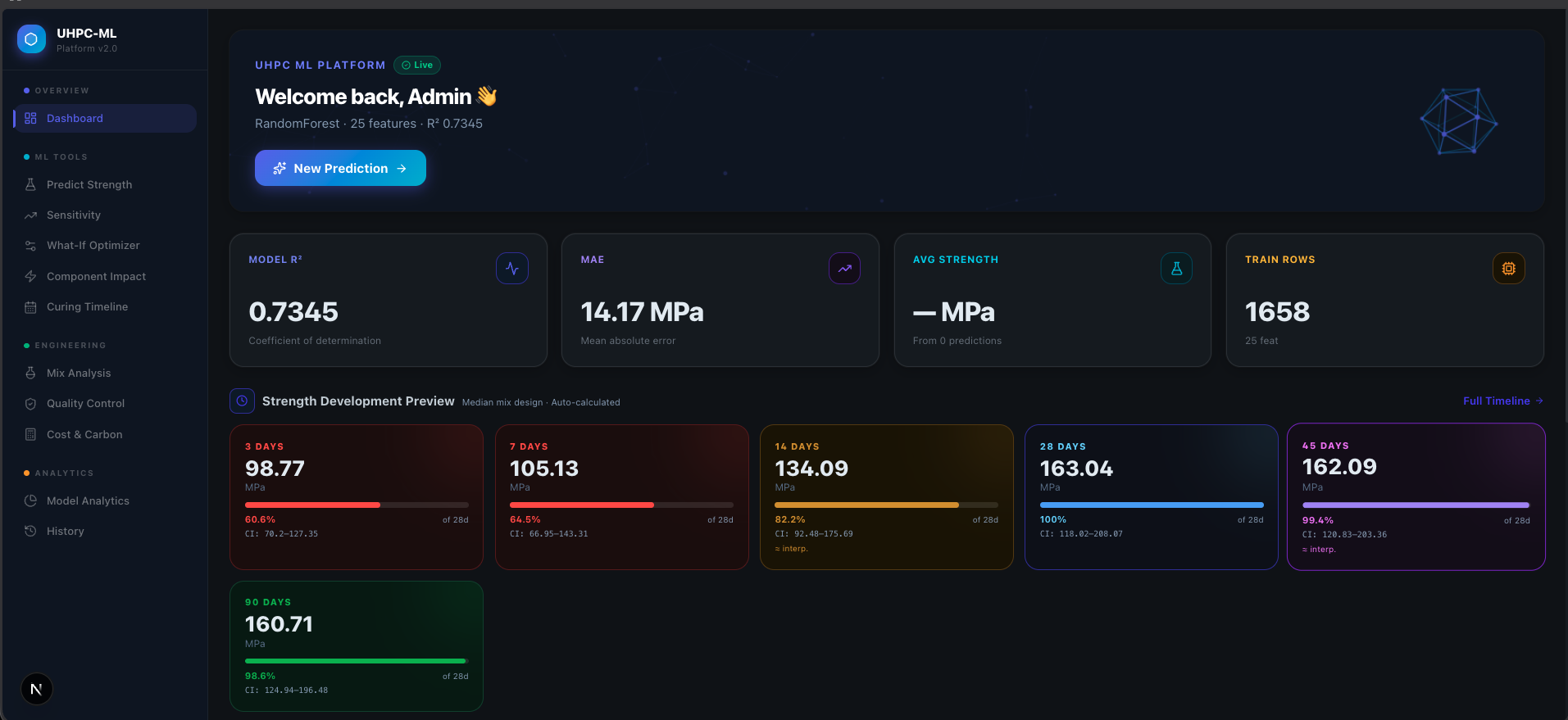
Ultra-High Performance Concrete (UHPC) meets machine learning. Working with Corol.org and NunaFab, I built compressive strength prediction models for UHPC mix designs — telling structural engineers not just what mix achieves target strength, but WHY each constituent (water-cement ratio, silica fume, fibre dosage, curing age) drives the outcome. The dataset was only 200 rows. Transfer learning from related concrete domains, aggressive feature engineering, and an SHAP-explainable gradient-boosting ensemble got R² to 0.89.
SHAP attribution made the model interpretable: engineers saw exact feature impact values (φᵢ) for each mix ingredient — silica fume contribution, fibre reinforcement effect, W/C ratio influence. Reduced physical lab testing cycles from weeks to a single afternoon. Screened hundreds of UHPC formulations computationally before any concrete was poured.
Lab cycles: weeks → one afternoon · 100s of mixes screened computationally · R² = 0.89 · SHAP-explainable
Every enterprise tool lives in a silo — Slack, CRMs, databases, internal APIs. AI agents need one standard to speak to all of them. I built a production MCP (Model Context Protocol) server that acts as the universal backbone. Write one integration, reach everything. The agent calls MCP; MCP speaks to the world. This is how agentic behaviour is triggered in real-world systems: LLM receives context → determines tool needed → MCP routes call → returns structured result → LLM continues reasoning.
Built multi-tool orchestration: parallel tool calls, retry logic, structured output parsing, and context memory integration so agents remember previous tool results across a session.
One server · N integrations · Agentic pipelines with persistent context memory
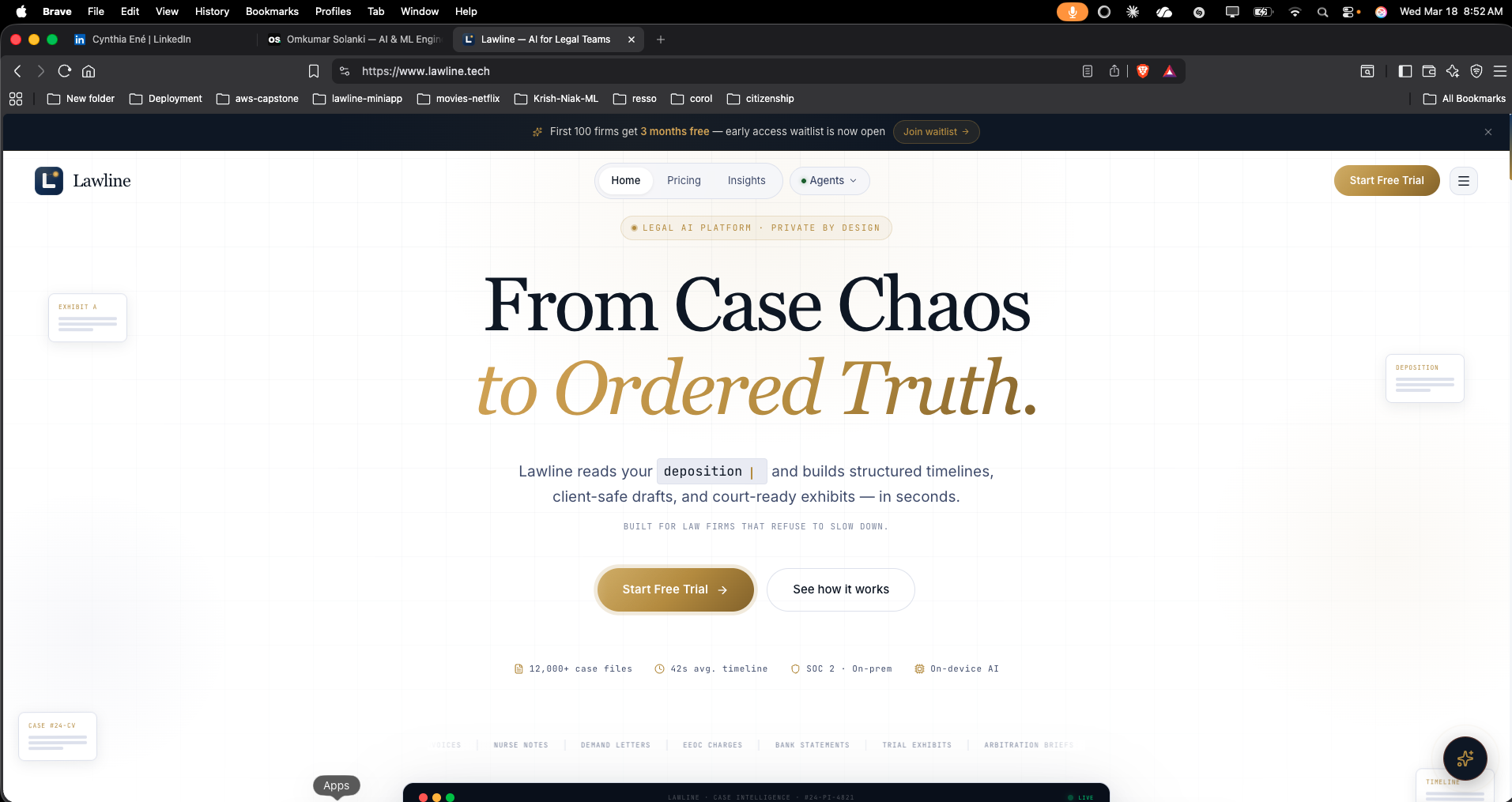
Lawline.tech — Live SaaS productFine-tuned LLM · HNSW · FastAPI
Built the AI core for Lawline.tech — a Canadian legal research platform serving attorneys who cannot use any cloud AI due to attorney-client privilege. Built a fully local RAG stack: HNSW vector store over Canadian legal corpora, BGE cross-encoder reranker, GGUF-quantized local LLM — zero data ever leaves the office. Sub-4% hallucination rate on legal eval sets, now in enterprise licensing discussions.
Designed the full pipeline: PDF ingestion → semantic chunking (512-token, 128 overlap) → local embeddings → HNSW index → top-K reranked retrieval → GGUF LLM response. Built confidence-gated output: low-confidence answers route to human review instead of surfacing to attorneys. The architecture became the sales pitch — attorneys demo'd the zero-outbound-packets screen to their law society contacts.
A religious organisation managing thousands of donors needed AI search but couldn't send a single byte to the cloud. I designed and built a complete on-premise RAG stack for Vadtal: quantized LLM running on 16 GB RAM using GGUF format, a custom HNSW vector store with semantic chunking and metadata filtering, cosine similarity scoring, and a FastAPI inference server. Everything — embedding, retrieval, generation — runs locally.
Built the full RAG pipeline: document ingestion → semantic chunking → embedding (local model) → HNSW index → top-k retrieval with cosine similarity → context injection → LLM response. Sub-1s end-to-end query latency, 100% private, works offline.
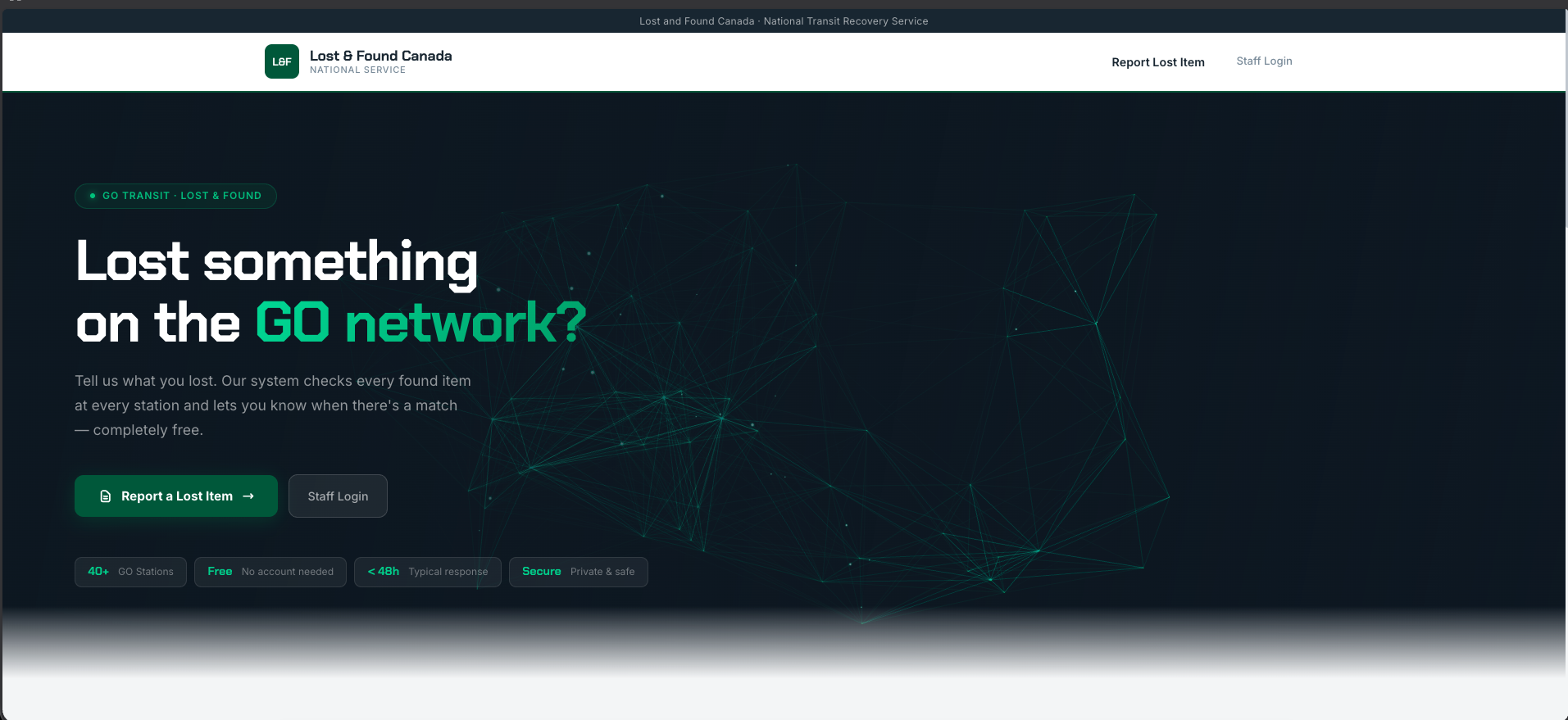
TTC Lost & Found — System overviewFull-stack · AI similarity matching engine
Built a complete digital Lost & Found system designed for a major North American transit network at 1.7M-daily-rider scale. The platform digitizes the entire claim lifecycle: staff report found items via a mobile app, each item gets a unique QR-tagged scan record, and owners submit claims through a mobile-first portal. An AI similarity-matching engine connects found items to incoming claims using description embeddings.
Full pipeline: mobile item reporting → QR generation → owner claim portal → AI description similarity matching → staff approval dashboard. Built for real operational constraints — works on spotty transit WiFi, handles hundreds of daily items, fully auditable claim history. Production-ready architecture, not a school demo.
Full claim lifecycle · AI item matching · 1.7M-rider scale · Mobile-first
From your problem to working software. No slide decks.
Five steps that any client or hiring manager can hold me to. Every phase ends with a clear deliverable, not a status update.
01
Week 1
Diagnose
I sit with your team, map the actual problem against what you think the problem is, and identify the root cause. No solution proposed until I can write a one-paragraph problem statement you fully agree with.
Stakeholder interviewsSystem auditRoot cause analysis
02
Week 1-2
Scope
I write a Statement of Work with a fixed deliverable, success metric, and timeline. You know exactly what you're getting and how you'll know if it worked — before a single line of code is written.
SoWSuccess metricsRisk register
03
Week 2-6
Build
I ship in weekly increments. Each Friday you get a working demo, not a slide. Every agent, model, or API is tested in an environment that mirrors production — not a notebook.
Weekly demosCI/CD from day 1Real data testing
04
Week 6-8
Harden
Guardrails, observability, and load testing before anything touches your users. I instrument every pipeline node so you can see latency, error rates, and model drift without calling me.
ObservabilityGuardrailsLoad testing
05
Week 8+
Transfer
I document everything, train your team, and hand over a codebase your engineers can own. The goal is for you to not need me — and for the system to keep working after I leave.
RunbooksTeam trainingClean handoff
Ask my AI
Put a problem to the agent.
A multi-agent pipeline — router, case-matcher, architect, consultant — grounded in the systems I've shipped. Ask it how I'd build yours.
Ask how Om architects production AI — agents, orchestration, RAG, real-time inference. The pipeline matches your question to work he's shipped, then answers.
About
The engineer who ships the whole thing.
Honours BASc in AI. AWS-certified. Three years building production AI systems across hiring tech, legal AI, materials science, and enterprise automation — each one deployed, measured, and handed off with documentation.
I started building AI systems before the current wave made it fashionable. I understand the math — gradient descent, attention mechanisms, RAG architectures — and I understand what it takes to keep them working at 3 AM when an inference pipeline is down and someone's live interview is waiting. My standard is simple: if you can't measure it improving something real, it doesn't ship.
Designed and built the entire AI platform from zero: WebRTC audio ingestion at 8 kHz, custom speaker diarization pipeline separating candidate and interviewer in real time, NLP feature extraction across prosody and semantics, and a live hire-probability scoring model at <2s inference latency. Built the talking AI avatar system — lip-sync via audio-to-viseme mapping, on-device model quantisation, and WebSocket event bus for real-time video rendering. Every word spoken becomes structured signals. Every interview is scored live.
Nov 2025 — Present
HariKrushna Software
AI Architect & Agentic Software Engineer
Consulting on production AI architecture for enterprise clients across HR tech, compliance, and materials science. Delivered: on-premise RAG stacks (GGUF + HNSW, 100% private, offline-capable), MCP server integrations bridging AI agents to enterprise APIs (Slack, CRMs, databases), and multi-agent orchestration pipelines with persistent context memory. Work spans the full agentic stack — from LLM reasoning loops and tool dispatch, to MLOps and drift detection.
Applied ML to Ultra-High Performance Concrete (UHPC) compressive strength prediction. Built SHAP-explainable XGBoost ensemble models on a 200-row dataset — showing structural engineers not just which mix achieves target strength, but which constituents drive the outcome (W/C ratio, silica fume, fibre dosage, curing age — φᵢ values per ingredient). Transfer learning + aggressive feature engineering got R² = 0.89. Extended to NunaFab's structural composite formulations. Result: physical lab testing cycles cut from weeks to one afternoon, hundreds of mixes screened computationally.